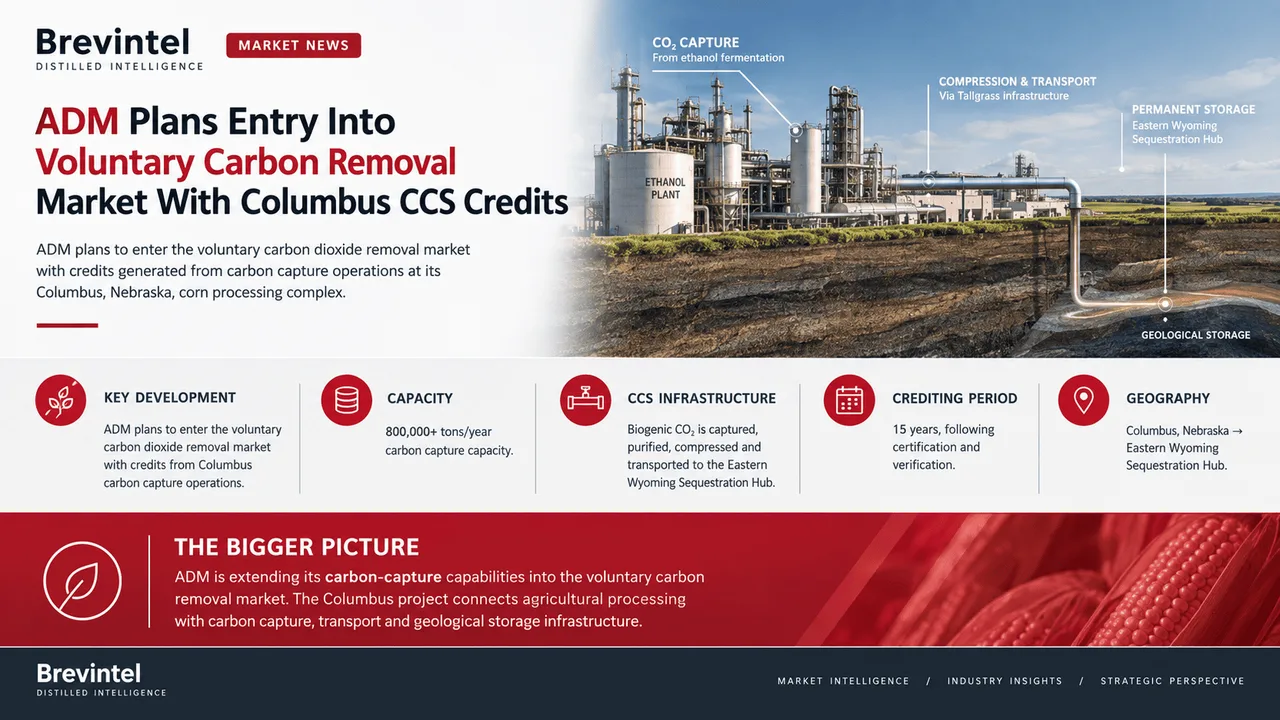
ADM plans to enter the voluntary carbon dioxide removal market with credits generated by carbon capture operations at its Columbus, Nebraska, corn processing complex. The facility has more than 800,000 tons of annual carbon capture capacity.
The carbon removal credits are undergoing certification and issuance through Puro.earth under its Geologically Stored Carbon methodology, Edition 2024. Initial certification and issuance are expected by year end, subject to completion of the certification and verification process.
Columbus Facility to Support Carbon Removal Credits
ADM inaugurated carbon capture and storage operations at Columbus in 2025 in partnership with energy infrastructure provider Tallgrass. The project captures biogenic carbon dioxide produced during ethanol fermentation at ADM's corn processing facility.
The captured CO2 is purified, compressed and transported through Tallgrass infrastructure to the Eastern Wyoming Sequestration Hub, where it is intended for permanent underground storage through carbon capture and storage wells regulated under a Wyoming Department of Environmental Quality Class VI permit.
15-Year Crediting Period Planned
Following successful certification and verification, ADM expects to begin a 15-year crediting period for the Columbus facility. This would allow the project to generate carbon removal credits over an extended period and expand ADM's participation in voluntary carbon removal markets.
ADM said the offering could support customers across multiple industries, including technology, finance, aviation and pharmaceuticals, as companies pursue carbon reduction and removal objectives.
Agriculture and Lower-Carbon Solutions
ADM said carbon capture is part of a broader strategy to develop lower-carbon solutions connected to agriculture. The company also highlighted its activities in regenerative agriculture and renewable natural gas as areas where agricultural capabilities can support emerging environmental and commercial applications.
ADM employs more than 650 people in Nebraska. Its Columbus processing complex includes wet and dry mills that convert corn into food ingredients, fuels and animal feed products.